
Informal Co-operation isn’t Outside the Movement — it’s Where the Movement Began

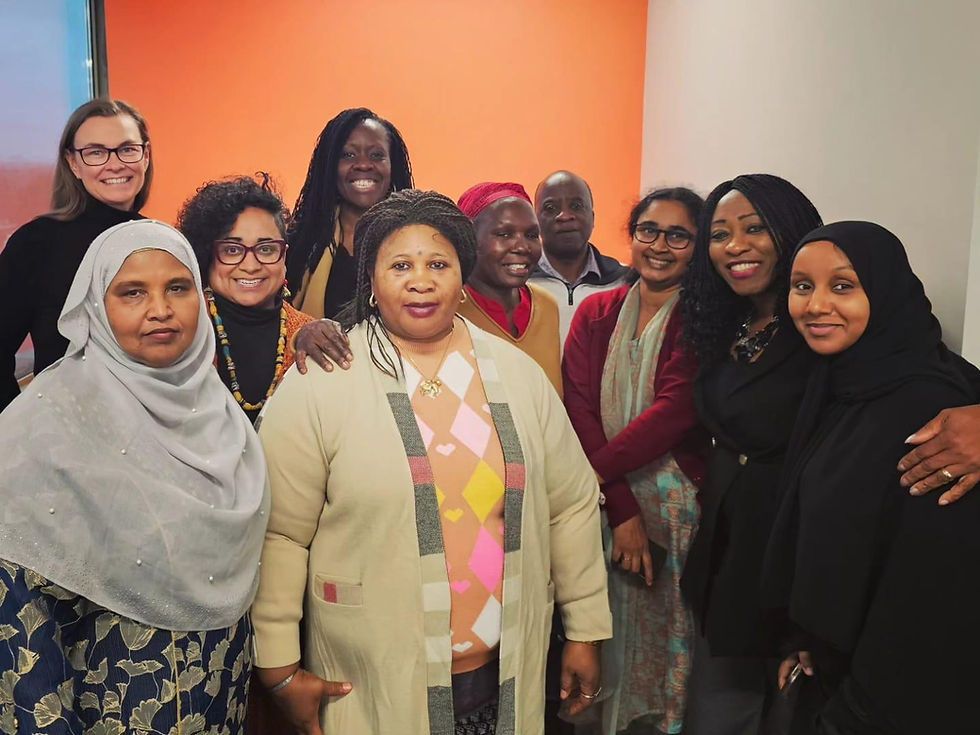
Pictured: The ROSCA Network Organization Meeting.
Last month, at the Worlding Feminist Economic Symposium at the University of Toronto, I joined scholars, lawyers, artists, and practitioners to explore the worlds of co‑operative economics, ROSCAs, art, and the law. My role was to highlight something our sector doesn’t say nearly enough: the bridge between informal and formal co‑ops already exists — communities built it long before we arrived.
Where Co‑operation Really Begins
Oftentimes, before they explore the need for incorporation documents, bylaws, or regulatory frameworks, people and communities are practicing co‑operation in ways that are deeply relational and profoundly effective.
ROSCAs (Rotating Savings and Credit Associations)
Lending circles
Mutual aid networks
Informal community businesses and shared wealth systems
These aren’t “alternatives” to co-ops. They are the blueprint.
Communities typically create these systems because formal institutions aren’t meeting their needs. They work because they are built on trust, reciprocity, and relationships — the same values that formal co‑operatives now champion.
These Communities Aren’t Asking to Fit In — They’re Asking How Co‑ops Can Support Them
At the Ontario Co-operative Association, we’re seeing growing interest from communities that haven’t always been represented in the formal co‑op sector. What stands out to me, is the shift in the questions they ask.
They’re not asking: “How do we create a co-operative to do what we want to do?” They’re asking: “How can a co‑operative structure support what our community is already doing?”
That slight distinction matters. It reminds us that our job isn’t always to introduce co‑operation. Sometimes it’s to recognize the co‑operation already happening and strengthen it.
Informal and Formal Co-ops Aren’t Opposites
The co-operative sector in Ontario seems to see formal co-operatives as more legitimate than informal systems. But the truth is, informal co‑operation is not a lesser version of formal co‑operation. It is the foundation on which formal co‑ops were built.
Formal structures can be powerful tool, but only when they protect the trust, relationships, and community power that already exist.
The Real Risk Isn’t Informality — It’s Lack of Support
When people talk about the “risks” of informal systems, they often point to the wrong thing. The risk rarely comes from a lack of organizational structure. It comes from:
lack of supportive policy
lack of recognition
lack of accessible pathways into formal structures
This becomes especially clear when communities try to raise capital.
In Ontario, the offering statement process through FSRA can be expensive and difficult for small or emerging groups. That creates barriers for communities who want to use co‑operatives to build local wealth and ownership.
That’s why OCA continues to advocate for changes such as:
raising offering‑statement exemption limits
making compliance more accessible for community‑scale co‑ops
Regulation should protect people — but it should also enable community ownership. Those goals can absolutely work together.
Diversity Strengthens the Co‑operative Movement
As more communities explore co‑ops as tools for wealth‑building and self‑determination, the movement has a real opportunity to grow stronger.
Different cultures bring different ways of co‑operating. Different histories bring different models of shared ownership. Different communities bring different visions of what collective power looks like.
The co‑operative movement doesn’t need to “teach” these communities how to co‑operate. It needs to learn from them, too.
Two Questions the Sector Must Keep Asking
As we move forward, the co‑operative sector should be guided by two essential questions:
How do we create better pathways into formal co‑operative structures when communities want them?
How do we allow community‑led practices to shape and strengthen the co‑operative movement itself?
Because this evolution isn’t a threat. It’s the movement doing what it has always done — growing, adapting, and responding to community needs.
The most important takeaway here is that informal co‑operation isn’t a side story to the co‑operative movement — it’s the origin story. Everything else flows from that truth.
Check out The ROSCA Network to explore one of these informal systems and how they connect to the broader movement.
Submitted by: Jennifer Ross, Executive Director, Ontario Co-operative Association


Comments